Do you believe high-end kitchen cabinets must be made of solid wood? This common myth leads many buyers to invest in materials that warp and fail in high-humidity kitchen environments, causing costly replacements.
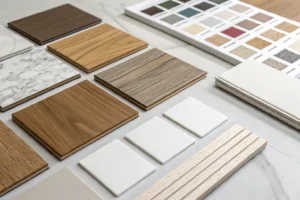
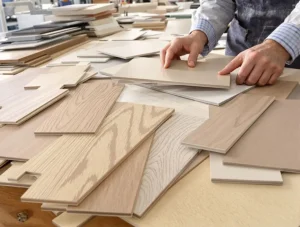
High-end kitchen cabinets are not made of solid wood. They use highly stable engineered cores like high-density particle board or plywood for the cabinet boxes, and MDF for the doors. The premium quality comes from the sophisticated finishes, such as lacquers, wood veneers, and advanced hardware.
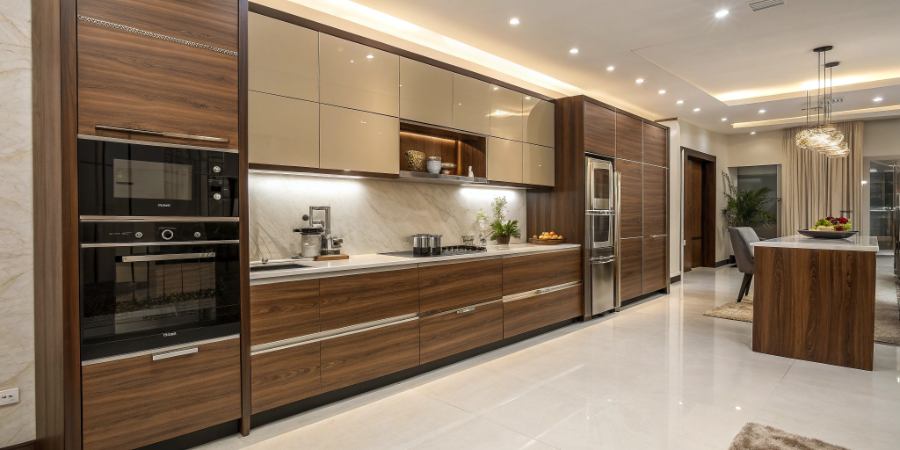
In my role as a sourcing manager for Veyra Luxe, I’ve seen many clients fall for the "solid wood is best" myth. It feels intuitive, but from a supply chain and manufacturing standpoint, it’s a recipe for disaster in a kitchen. The first thing I tell my clients is that the most expensive material is not always the best material. In a space with constant changes in temperature, moisture, and heavy use, stability is king. A truly high-end cabinet is defined by its ability to look perfect not just on day one, but for years to come. That requires a smarter approach to materials, focusing on an engineered core for strength and premium finishes for beauty.
What are high-end kitchen cabinets made of?
Are you sourcing cabinets based on the idea that expensive wood equals quality? This thinking can lead to specifying materials that are unstable in kitchens. This can result in warping, cracking, and unhappy clients.
True high-end cabinets use a combination of materials. The cabinet box is typically made from high-quality plywood or moisture-resistant particle board for stability. The doors are often MDF, which provides a perfectly smooth and stable base for premium finishes like matte lacquer or wood veneers.
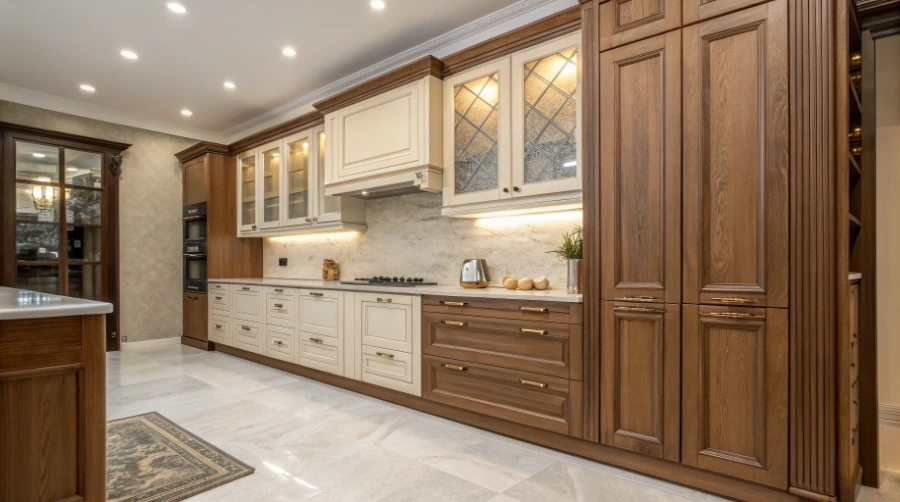
When I work with commercial buyers like Michael, we focus on performance, not just raw material names. The kitchen is the toughest room in a home. It has heat from the oven, steam from the dishwasher, and constant opening and closing of doors. Solid wood expands and contracts with these changes, which is a huge risk. High-end European and American brands know this. They build their cabinets with a core principle: use stable materials1 for the structure and apply beautiful, durable finishes to the surface. This is why engineered woods2 are the professional’s choice. They don’t warp, they resist moisture better when properly sealed, and they provide a flawless substrate for the finishes that create that high-end look. It’s a solution born from engineering, not just tradition.
How can you tell if cabinets are MDF or particle board?
Trying to identify cabinet materials in the field can be difficult. Misidentifying the core material can lead to ordering the wrong product or failing a quality inspection, which can cause project delays and cost overruns.
The easiest way to tell the difference is by looking at an unfinished edge or a screw hole. Particle board has a coarse, grainy texture made of visible wood chips. MDF looks like smooth, compressed paper fibers with a uniform and dense appearance. It is also significantly heavier.
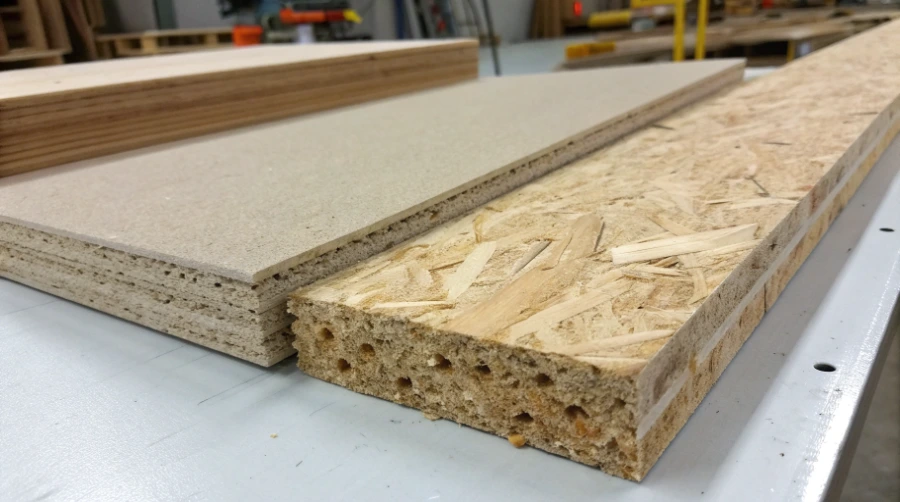
In my experience, the more important question for a professional buyer isn’t if it’s particle board, but what grade of particle board it is. From a sourcing perspective, there’s a huge difference between standard low-density board and the high-density, moisture-resistant particle board used in premium European kitchens. The same goes for MDF. When you’re specifying for a high-end project, you should be asking your supplier for the material spec sheets.
Key Inspection Points
| Feature | Particle Board | MDF (Medium-Density Fiberboard)3 |
|---|---|---|
| Edge Texture | Coarse, you can see individual wood chips and flecks. | Smooth and uniform, like tightly packed cardboard. No visible chips. |
| Surface | Can be slightly uneven or porous under a laminate. | Extremely flat and smooth, ideal for painting and lacquering. |
| Weight | Generally lighter than MDF of the same size. | Noticeably heavier and denser. |
| Screw Holding | Weaker; screws can strip more easily if not drilled properly. | Stronger screw-holding power due to its high density. |
For any large-scale project, always request a sample that shows a cross-section of the cabinet box and door. This removes any guesswork and ensures the quality meets your project standards.
You’ve specified the right materials, but the final product still doesn’t feel "high-end." This is frustrating and can damage your reputation. The problem is that the visible materials are only part of the story.
The true premium quality of a cabinet is determined by its hardware and craftsmanship. High-end cabinets use top-tier hardware from brands like Blum or Hettich for a smooth, silent experience. The craftsmanship is seen in the precision of the cuts, flawless edge banding, and multi-layered finishing.
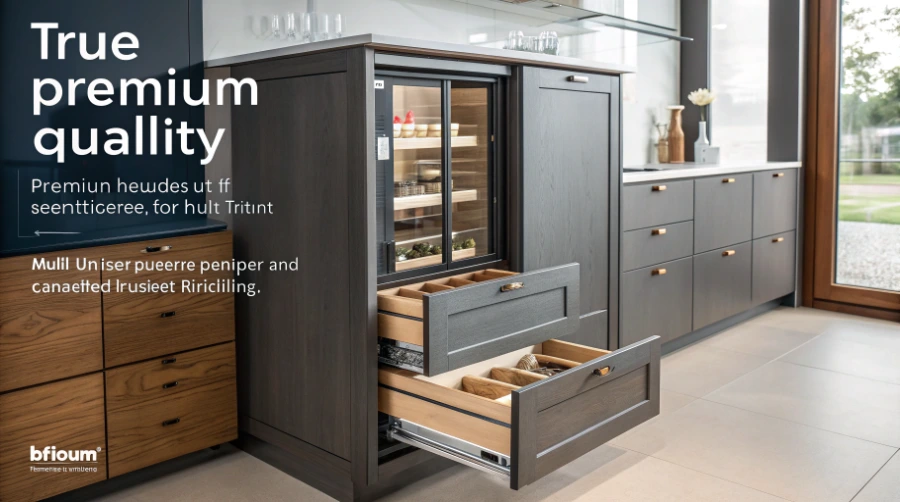
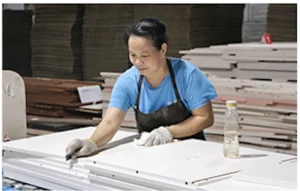
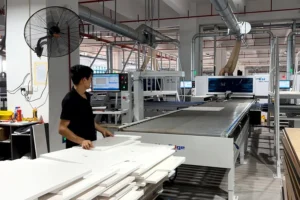
I always advise my clients to allocate a significant part of their cabinet budget to hardware4. I’d say spending 20% more on hardware4 can elevate the entire user experience by 80%. When a drawer glides open silently and closes with a soft touch, that is a clear signal of quality. This is what the end-user interacts with every single day. Beyond hardware4, the manufacturing process5 is what separates the good from the great. It’s about the details—are the paint finishes applied in a dust-free environment? Are the wood veneers book-matched for a continuous grain pattern across doors? Is the edge banding applied with PUR glue for maximum water resistance? These are the details that define a premium product and justify the cost. They are also the details I focus on when vetting suppliers for our clients at Veyra Luxe.
Are high-end kitchen cabinets worth the investment?
You are under pressure to manage costs for a project. It’s tempting to cut the budget for cabinets, but you’re worried this will compromise the project’s long-term value and client satisfaction.
Yes, high-end kitchen cabinets are absolutely worth it, because they are an investment in durability and user experience, not just aesthetics. Their superior materials and construction prevent costly repairs and replacements down the line. They are a key feature that elevates the perceived value of the entire property.

I’ve been involved in many whole-home customization projects across the US. The kitchen is consistently the room that gets the most scrutiny from potential buyers or hotel guests. A cheap kitchen can bring down the feel of an entire luxury property. When you invest in high-end cabinets6, you’re not just buying wood boxes. You are buying a trouble-free product7 that will perform flawlessly for years. The stable cores prevent warping, the premium hardware ensures smooth function, and the durable finishes resist wear and tear. This reliability is critical in both hospitality and residential developments. For a commercial buyer like Michael, specifying high-end cabinets6 means fewer callbacks, better client relationships, and a stronger portfolio. It’s a strategic decision that pays for itself by protecting the project’s overall quality and brand reputation.
Conclusion
High-end cabinets are not made from expensive wood, but from the right materials for the job. They use stable engineered cores, flawless finishes, and premium hardware to deliver lasting quality and a superior user experience.
-
Learn about the significance of stable materials in cabinetry to ensure longevity and performance in high-traffic areas like kitchens. ↩
-
Explore this link to understand why engineered woods are preferred for their stability and durability in kitchen designs. ↩
-
Exploring this link will provide insights into the benefits of MDF, helping you make informed decisions for your projects. ↩
-
Exploring this link will reveal how quality hardware can significantly enhance user experience and product longevity. ↩ ↩ ↩
-
Understanding the manufacturing process is crucial for recognizing what makes a cabinet truly premium and worth the investment. ↩
-
Explore the advantages of high-end cabinets to understand their impact on property value and buyer satisfaction. ↩ ↩
-
Learn about the features that define trouble-free kitchen cabinets and how they enhance long-term performance. ↩