When you ask how to price custom furniture, you are not just looking for a formula. You are looking for a method to get the quality you want without overpaying. But there is a problem.
There is no fixed price for custom furniture. The price is defined by you. A simple design can cost $3,000, while a complex one with high-end materials can easily reach $15,000 for the same size item. The cost reflects the effort needed to execute your vision perfectly.
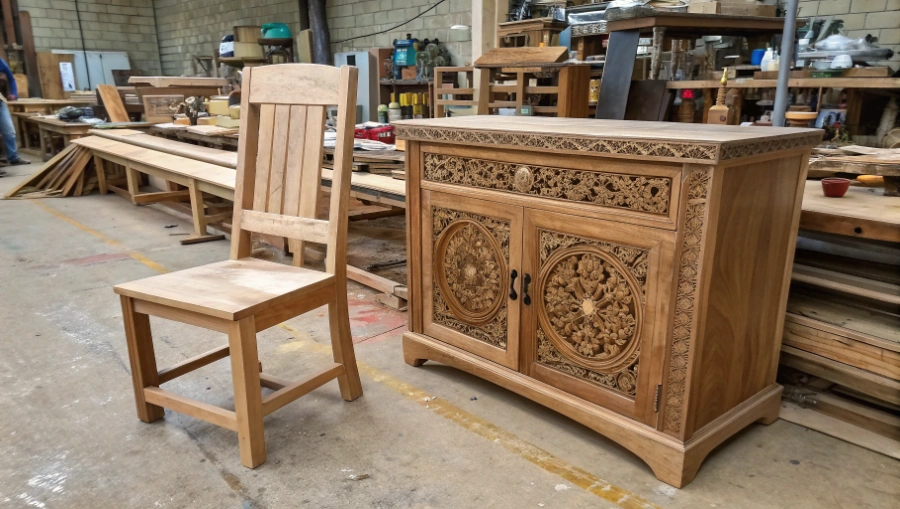
In my role managing supply chains for Veyra Luxe, I have seen many clients calculate costs the wrong way. They focus on the material, like the type of wood. But they ignore the factors that have a much bigger impact on the final price. These factors are design complexity, craftsmanship requirements, supply chain efficiency, and order volume. Pricing custom furniture is not like pricing a retail product. The price is based on the amount of effort required to turn your specific idea into a high-quality, finished piece.
How much should I charge for custom furniture?
You might think pricing is a simple formula: Materials + Labor + Profit = Price. This retail mindset leads you to misjudge the true cost drivers, making you vulnerable to either overpaying for simple work or under-budgeting for complex projects.
Professional pricing for custom furniture goes beyond basic costs. The most expensive parts are not the materials; they are the risk, precision, and craftsmanship needed to execute a complex design. The price reflects the capability to bring your vision to life without errors.
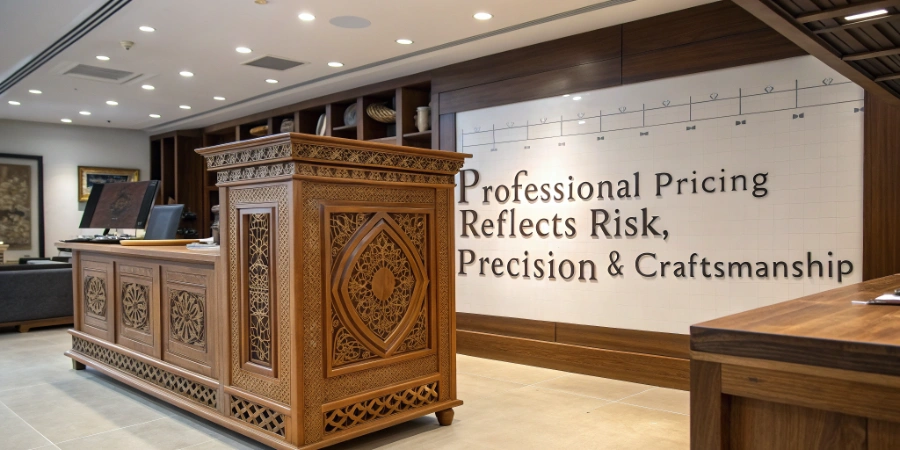
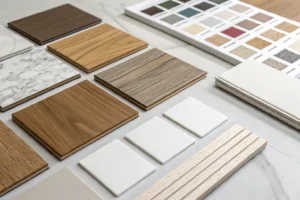
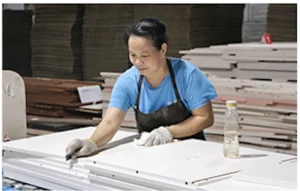
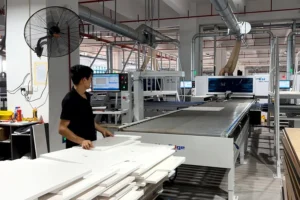
The simple cost-plus formula breaks down in high-end residential and hotel projects. Why? Because the wood is never the most expensive component. The real costs are hidden in the complexity. For example, a curved door panel is not just a piece of wood; it requires advanced CNC programming and meticulous hand-finishing. A design with integrated lighting and seamless metal inlays involves multiple suppliers and precise coordination. High-end craftsmanship is expensive because it requires an investment in technology and skilled labor to eliminate the possibility of error. A factory’s price reflects the cost of avoiding mistakes, which is far more valuable than the cost of the raw materials.
The 5 Real Factors That Determine Price
| Factor | How It Impacts Cost | Price Increase |
|---|---|---|
| 1. Design Complexity1 | Each special request, like curves or handle-less designs, adds risk and labor time. | +20% to 80% |
| 2. Craftsmanship Level | The quality of the finish, joinery, and hardware depends on the factory’s investment in technology and talent. | Varies Widely |
| 3. Supply Chain2 | Sourcing from an integrated hub like Foshan is far more efficient than sourcing from a region with a fragmented supply chain. | 3x to 5x cheaper than EU/US |
| 4. Order Volume | Setup costs are the same for one piece or 100. Larger orders drastically reduce the per-unit price. | 30% to 60% lower per unit |
| 5. Risk Factor | Vague designs and unclear specifications force factories to price in the risk of rework and delays. | Varies Widely |
How to price custom made items?
You need a practical method to price custom items that accounts for all the variables. Following a simple, step-by-step process can help you define your needs clearly, which in turn allows suppliers to give you an accurate and fair price.
To price a custom item correctly, start by defining the quality grade, controlling design complexity, choosing a mature supply chain, and ordering in bulk when possible. Focus on the final result, not just the raw materials. This approach minimizes uncertainty and risk for the supplier.

Here is a five-step process I use with clients like Michael to ensure they get clear, competitive pricing.
Step 1: Determine the Quality Grade3.
Decide if you need basic, mid-range, high-end, or luxury quality. This single decision drives about 50% of the cost.
Step 2: Control Design Complexity.
Provide clear, detailed drawings. The more specific your design, the less risk the factory has to price in. Vague ideas lead to higher quotes.
Step 3: Choose a Mature Supply Chain4.
For large-scale projects like cabinetry and hotel furniture, a hub like Foshan offers unbeatable efficiency. For standard wooden furniture, Vietnam can be a good option.
Step 4: Order in Bulk Whenever Possible.
If you have a large project, order everything at once. This significantly reduces the per-unit cost.
Step 5: Focus on the Outcome, Not the Materials.
Ask suppliers about their quality control process, their experience with similar designs, and how they ensure consistency. These questions reveal their true capability and value.
This structured approach will help you get a price that is fair, transparent, and easy to negotiate.
How much does bespoke furniture cost?
You need concrete numbers to create a budget. While prices vary, there are industry benchmarks you can use as a starting point for different levels of quality and complexity.
Bespoke furniture pricing can be broken down into tiers. Basic custom pieces might cost $500-$900 per linear foot, while high-end projects with premium finishes can exceed $2,500 per linear foot. Ultra-luxury, one-of-a-kind pieces are priced individually, often starting at $8,000.
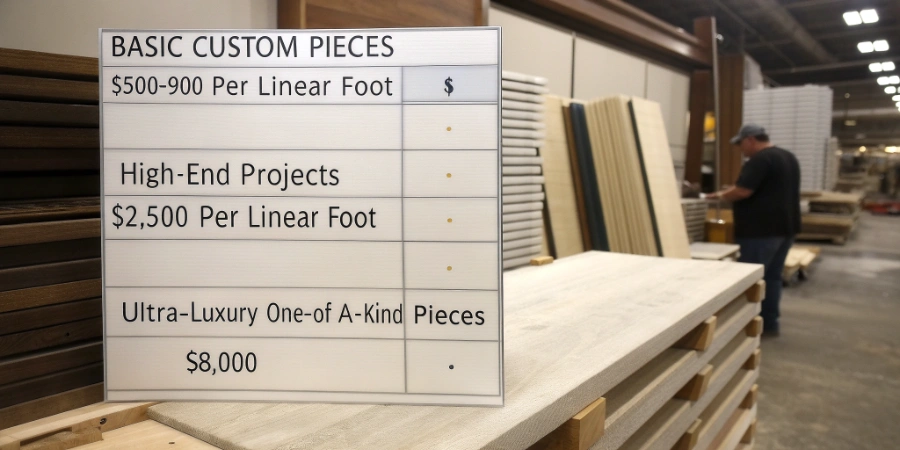
Based on my experience sourcing for global projects, here is a realistic pricing guide you can use for budget planning. These prices are based on a mature supply chain like the one in Foshan, which offers a strong balance of quality and cost-effectiveness.
Bespoke Furniture Pricing Tiers
| Quality Tier | Price Range (USD) | Common Characteristics |
|---|---|---|
| Basic Custom | $500 – $900 / linear foot | Functional design, standard materials, good quality construction. |
| Mid-Range Custom | $1,200 – $2,000 / linear foot | Veneer or lacquer finishes, better hardware, some design complexity. Suitable for most commercial projects. |
| High-End Bespoke5 | $2,500 – $5,000 / linear foot | Premium veneers, multi-layer lacquer, integrated lighting, complex designs. |
| Luxury/Artisan Grade6 | $8,000+ / piece | Unique, handcrafted pieces with metal inlays, top-tier veneers, and complex forms. |
These ranges help you align your client’s expectations with their budget. If a client wants a high-end look but only has a basic budget, you can use these numbers to explain what trade-offs are necessary in terms of design and materials.
What is the rule of thumb price for furniture for a sale?
You are trying to establish a budget for furnishing a property for sale. You need a quick and reliable rule of thumb to estimate the furniture cost as a percentage of the property’s value.
A common rule of thumb for furnishing a home for sale is to budget 10% of the property’s value for a comprehensive furnishing package. For just the custom built-in furniture, a more realistic starting point is 1-3% of the property’s value.
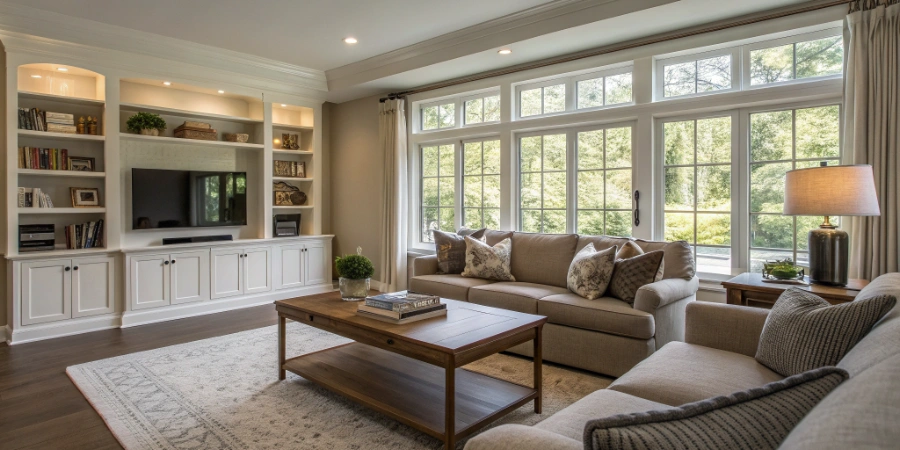
The "10% rule" is often cited by interior designers and includes everything from sofas and beds to rugs and lighting. However, for a commercial buyer or developer focused on the built-in elements that add permanent value, a more targeted approach is needed. The custom cabinetry7, wardrobes, and architectural millwork8 are what truly elevate a property.
For a $1 million home, a 1-3% budget for custom built-ins would be $10,000 to $30,000. This is a realistic starting point for good quality, mid-range custom furniture that will impress buyers and add tangible value to the property. This budget would cover a stylish kitchen, functional wardrobes, and elegant bathroom vanities. For luxury properties, this percentage would likely be higher to reflect the need for premium materials and high-end craftsmanship. This rule of thumb gives you a solid starting point for your initial project planning and financial forecasting.
Conclusion
Custom furniture is priced based on difficulty and certainty. To control the cost, you need to reduce uncertainty, clarify your design, and simplify complexity. Do this, and quotes will be clearer.
-
Understanding design complexity can help you make informed decisions about costs and expectations in your projects. ↩
-
Exploring supply chain dynamics can reveal cost-saving opportunities and improve your sourcing strategies. ↩
-
Understanding Quality Grade is crucial for pricing strategies, ensuring you get the best value for your investment. ↩
-
Exploring the impact of a Mature Supply Chain can help you optimize costs and efficiency in your projects. ↩
-
Explore this link to understand the unique features and benefits of High-End Bespoke furniture, enhancing your design choices. ↩
-
Discover the craftsmanship and exclusive qualities of Luxury/Artisan Grade furniture to elevate your project. ↩
-
Explore the advantages of custom cabinetry to understand how it can enhance your home’s value and aesthetics. ↩
-
Learn how architectural millwork can elevate your property’s design and increase its market appeal. ↩