What is the difference between laminate and melamine cabinets?
You see "laminate" and "melamine" listed for cabinets, but one costs significantly more. They both look like a finish over a wood core, so why the price gap? This common confusion can lead to overpaying for a standard product or choosing one that won’t last.
Melamine is a thin paper layer thermally fused directly onto a substrate like particleboard in a single step. Laminate is a separate, much thicker, and more durable sheet that is glued onto a substrate in a second manufacturing process. They are not in the same performance class.
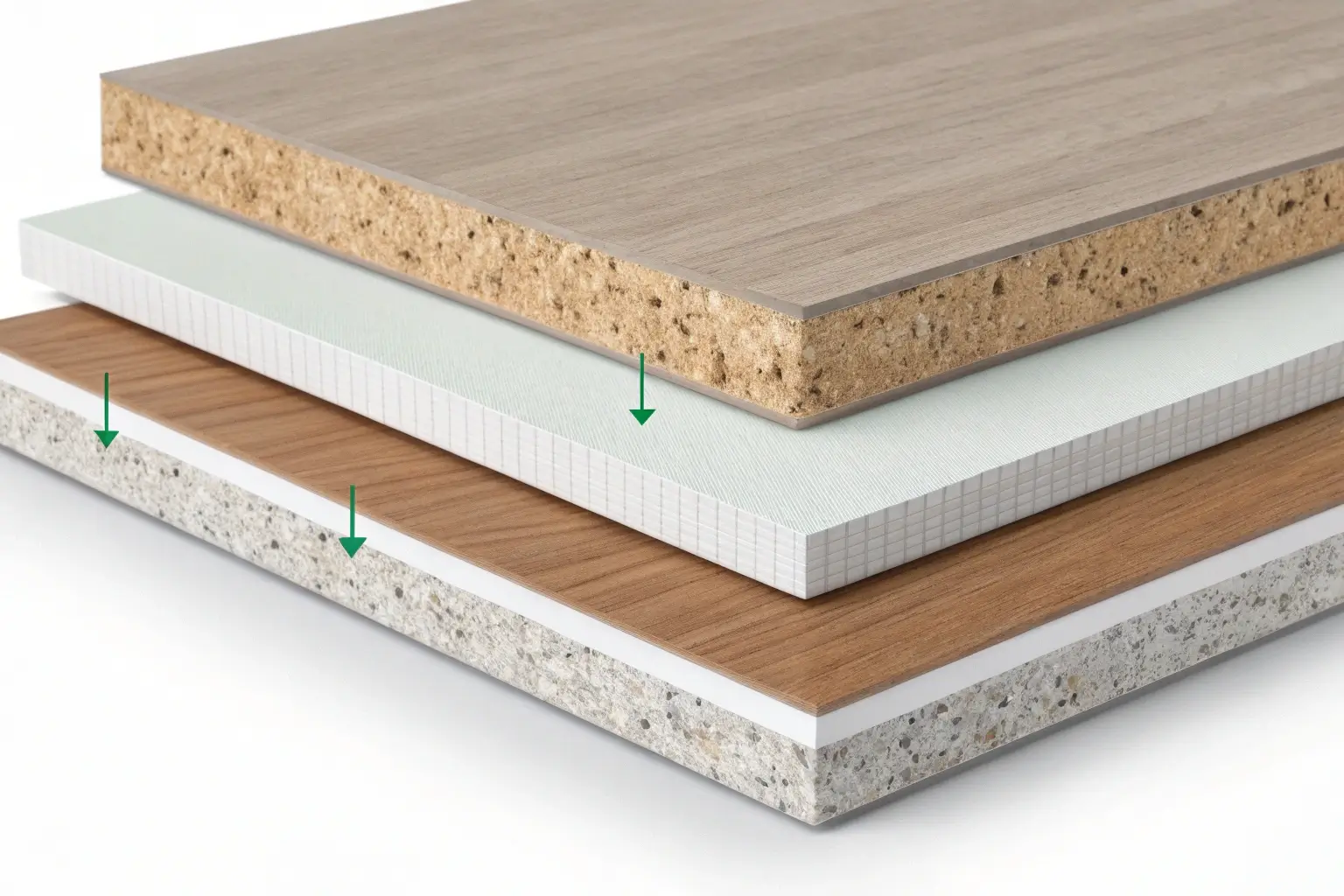
Honestly, 90% of people can’t tell the difference because sellers don’t explain it clearly. I’ve seen countless specifications where clients thought they were getting a premium product when they were actually getting a budget one. Let me break down the real-world difference I see every day in the supply chain. Melamine is an "economic integrated board," while laminate is an "upgraded exterior skin system." One is a cost-effective finish; the other is a protective shield.
Which is better, melamine or laminate?
You need to make a choice for your project and want to pick the "better" option. But choosing without understanding the trade-offs means you might sacrifice your budget for durability you don’t need, or save money now only to face costly repairs later.
Laminate is better for durability, impact resistance, and high-traffic areas due to its thicker surface. Melamine is better for budget-controlled projects, offering stable color and good performance for its cost. The "better" choice depends entirely on your project’s priorities.
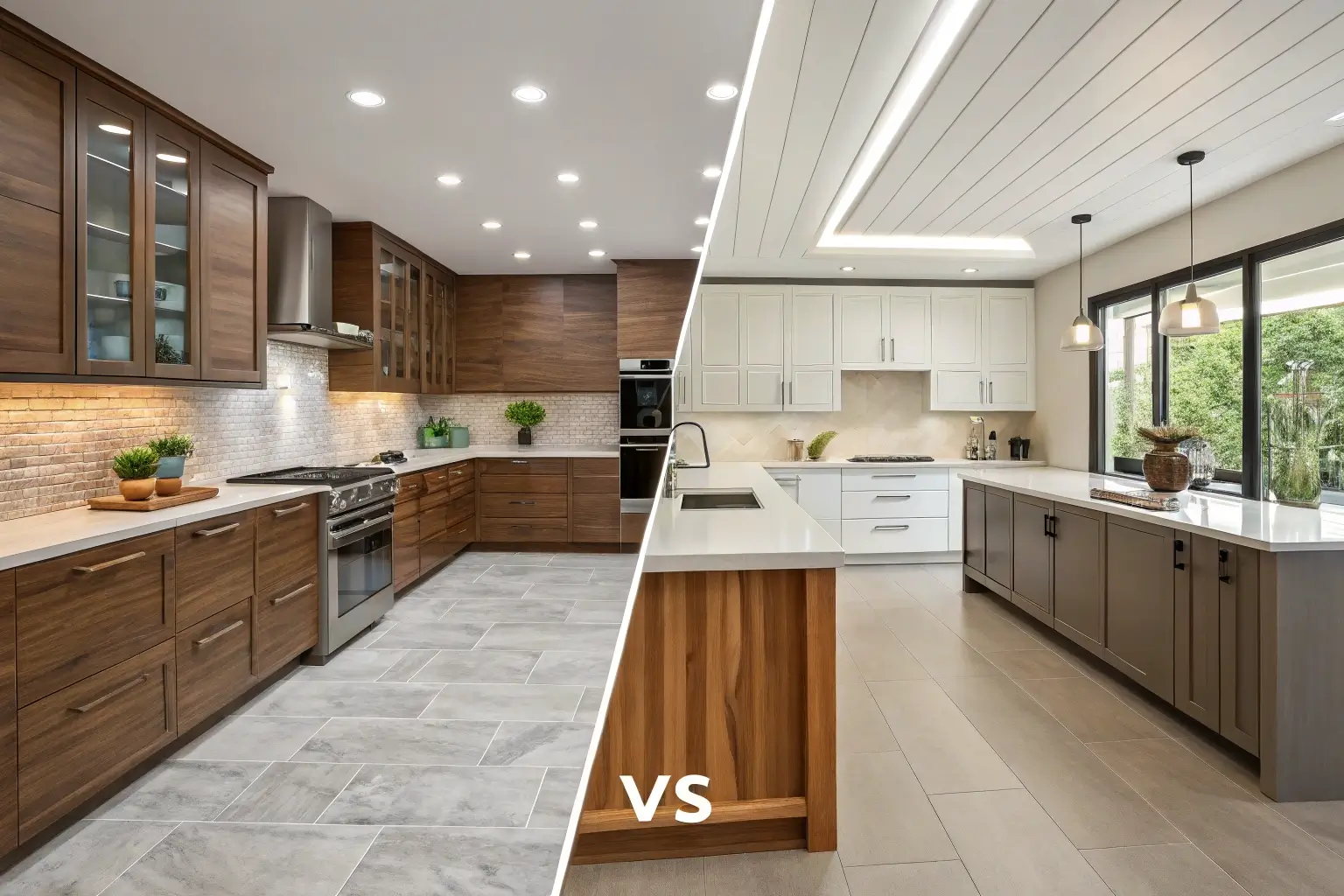
The key is to match the material to the application. Laminateis the "worry-free solution" for spaces that will see hard use, like a family kitchen or a hotel kitchenette. Its robust surface can handle bumps, scrapes, and moisture much more effectively. Melamine is the "good enough solution" for projects where cost is the primary driver and usage is moderate, such as rental apartments or large-scale housing developments. It provides a clean, consistent look at an excellent price point. High-quality melamine with good edge banding is a reliable product. The mistake is expecting it to perform like laminate in a demanding environment.
Melamine vs. Laminate: A Project Manager’s View
| Feature | Melamine (Thermally Fused Laminate) | Laminate (High-Pressure Laminate) |
|---|---|---|
| Durability1 | Good; resists scratches from light use. | Excellent; resists impact, scratches, and heat. |
| Moisture Resistance2 | Vulnerable at unsealed edges. | Highly resistant, especially at seams. |
| Cost | Low to Medium | Medium to High |
| Best For | Budget projects, rentals, closets, low-use areas. | Kitchens, hotels, commercial spaces, high-use areas. |
| The Takeaway | The "Good Enough" Solution | The "Worry-Free" Solution |
How do I know if my cabinets are melamine or laminate?
You are inspecting a cabinet sample or an existing installation and can’t tell the two apart. Without being able to identify them, you can’t accurately assess the quality or determine if you’re getting what you paid for.
To identify the material, look closely at the surface and the edge. Laminate (HPL) feels thicker, harder, and more substantial. On a cut edge, you may see a fine, dark line showing the profile of the laminate sheet itself. Melamine is thinner and bonded directly, appearing as a single, seamless layer on the core.
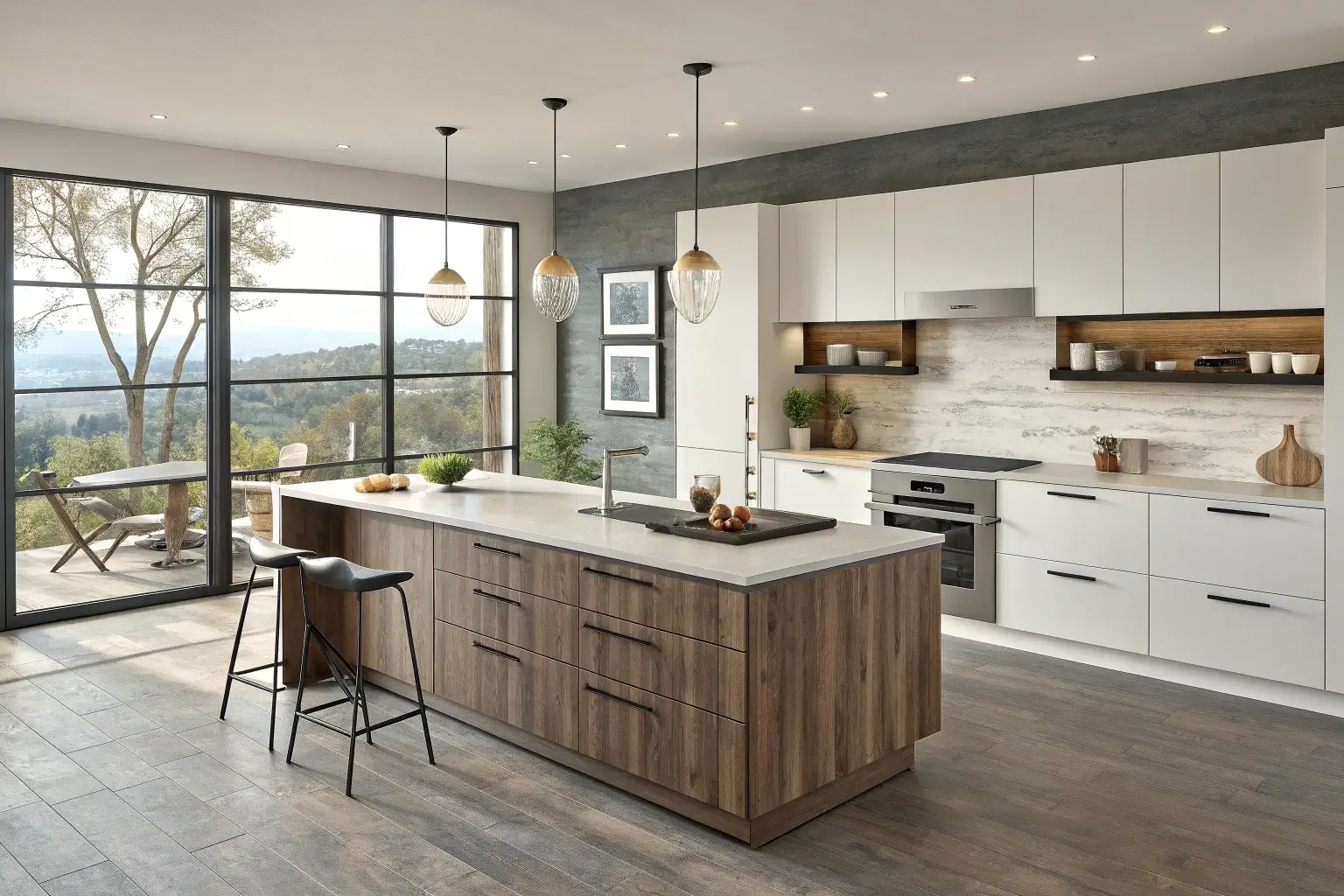
Here’s a practical test I use. Run your fingernail over the surface. A high-pressure laminate (HPL)3 surface feels dense and hard. It has a certain depth to it. Melamine feels more like a very thin, hard shell directly on the board. Another great clue is the edge banding. On a laminate cabinet, because the surface material is so thick and hard, the corner edge where the top meets the side banding feels very crisp and sharp, almost like a 90-degree angle. On a melamine4 cabinet, that same edge often feels slightly softer or more rounded because the material is thinner. When in doubt, ask your supplier for a technical data sheet. It will specify if the surface is thermally fused laminate (TFL/melamine4) or high-pressure laminate (HPL)1.
Is melamine good for kitchen cabinets?
You’re working with a tight budget and see melamine as a cost-effective option. But you’re worried it might be too cheap and won’t hold up in a demanding kitchen environment, leading to unsatisfied clients.
Yes, melamine is a good option for kitchen cabinets, provided you use a high-quality version and understand its limitations. For budget-conscious projects, rentals, or secondary kitchens, modern melamine with moisture-resistant cores and high-quality PUR edge banding is a durable and stable choice.

The idea that melamine is a "bad" material is outdated. The quality of melamine boards1 has improved dramatically. The key is not the melamine paper itself, but the components it’s combined with. A quality melamine cabinet will use a dense particleboard or MDF core that resists warping, and most importantly, it will have excellent edge banding. Polyurethane (PUR) edge banding creates a waterproof seal that protects the core material from moisture, which is the number one enemy of these cabinets. When I source for large-scale apartment projects, we specify a high-quality melamine board with PUR edging. It gives our clients a durable, water-resistant, and cost-effective cabinet that looks great and performs reliably for its intended use. It is a smart choice when used correctly.
What are the disadvantages of melamine cabinets?
You understand the cost benefits of melamine, but you need to know the potential downsides. To make an informed decision and manage your client’s expectations, you must be aware of where this material can fail.
The main disadvantages of melamine are its thin surface, which offers lower impact resistance than laminate, and its vulnerability to water damage if the edges are not perfectly sealed. Once water penetrates the core material, the board will swell and cannot be effectively repaired.
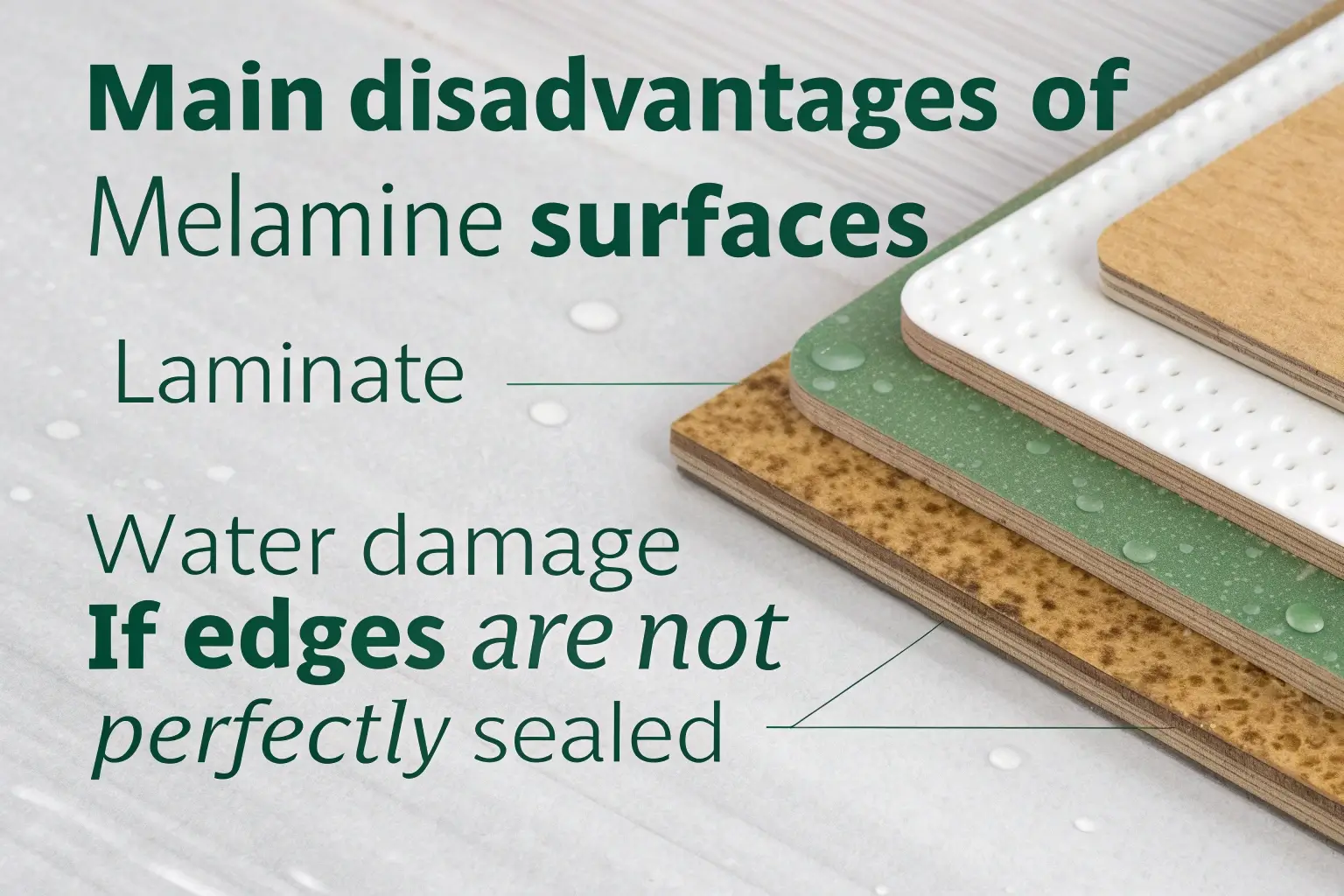
As a supply chain manager, my job is to manage risk. The biggest risk with melamine is water. A single chip on a corner or a poorly applied edge band can become an entry point for moisture. In a kitchen, this is a serious concern around sinks and dishwashers. Once the particleboard core gets wet, it swells up like a sponge and flakes apart. The damage is irreversible. This is why edge banding5 is so critical. A cheap, glued-on edge will peel away in a humid environment, but a modern PUR-adhered edge6 creates a permanent, waterproof bond. The other issue is impact resistance. The thin melamine layer can chip if hit with a heavy object, exposing the core underneath. While it’s great for regular use, it doesn’t have the brute strength of high-pressure laminate.
Conclusion
Melamine is the "good enough" solution, while laminate is the "worry-free" solution. It is not about which is superior, but which is more suitable for your project’s budget and long-term goals.
-
Exploring durability differences will guide you in selecting the best material for your specific project needs. ↩ ↩ ↩
-
Understanding moisture resistance can help you choose the right materials for your projects, ensuring durability and longevity. ↩
-
Understanding HPL can help you choose durable and stylish surfaces for your projects. ↩
-
Exploring melamine’s benefits will guide you in selecting the right materials for your cabinetry needs. ↩ ↩
-
Understanding edge banding can help you ensure durability and moisture resistance in your projects. ↩
-
Exploring PUR-adhered edges will reveal their advantages in creating a waterproof bond, essential for kitchen applications. ↩