
In custom furniture manufacturing, quality is not an accident—it is the result of strict systems, clear standards, and disciplined execution.
Unlike mass-produced furniture, custom projects involve unique sizes, finishes, hardware combinations, and site-specific requirements. That means quality control must be more detailed and process-driven.
Whether you are a homeowner, distributor, contractor, or developer, understanding how quality is controlled in custom furniture manufacturing helps reduce risk and protect your investment.
1. Start with Clear Technical Drawings
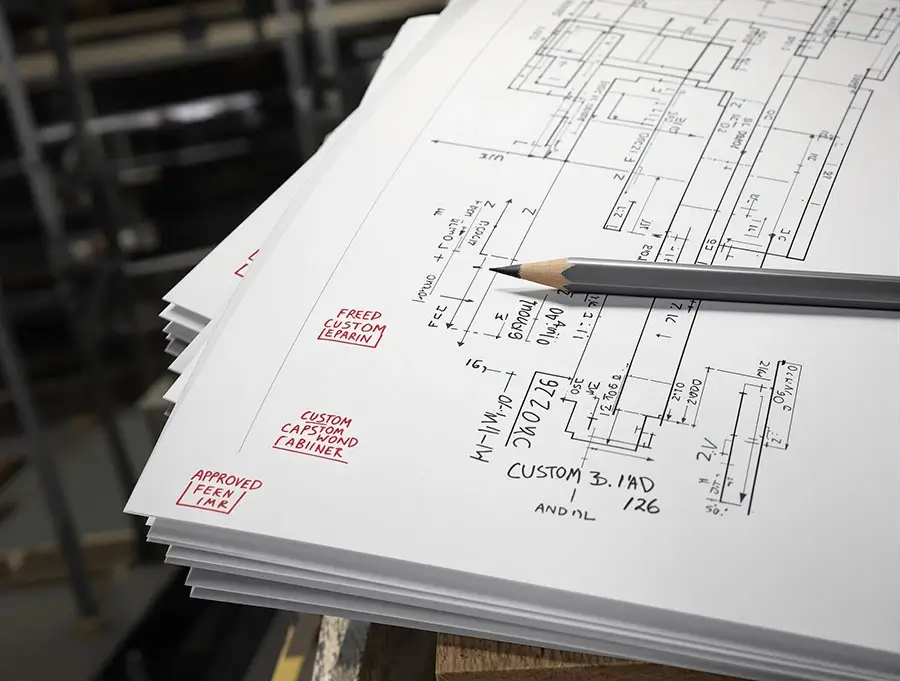
Quality begins before production.
Every custom furniture project should have:
- Approved 2D and 3D drawings
- Confirmed dimensions
- Material specifications
- Hardware lists
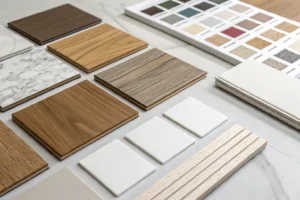
- Finish samples
Without precise documentation, even the best factory cannot guarantee consistency.
📌 Key rule:
No production should begin without final signed drawings.
2. Material Inspection Before Production
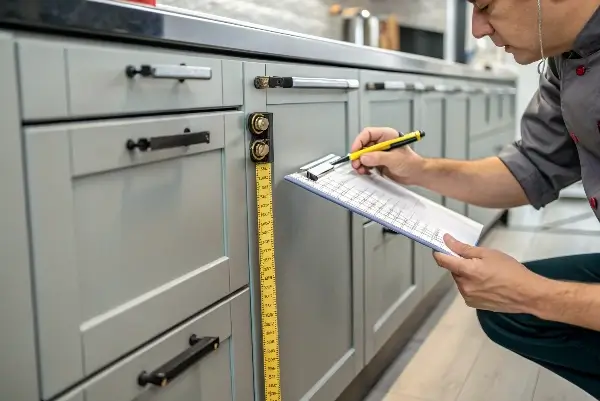
Raw materials directly affect durability and performance.
Materials that must be inspected:
- MDF, plywood, particle board
- Solid wood panels
- Stainless steel sheets
- Edge banding materials
- Hardware (hinges, slides, handles)
Factories should check:
- Thickness consistency
- Surface flatness
- Moisture content (for wood-based materials)
- Surface defects
Poor material control is one of the biggest causes of long-term problems.
3. Precision Cutting & Processing Control
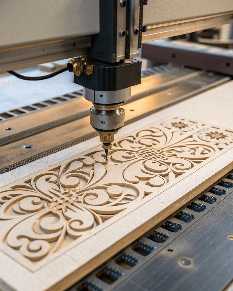
During panel cutting and machining:
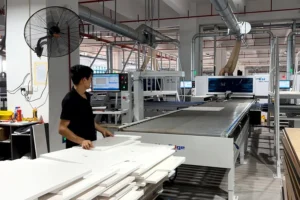
- CNC machines must be calibrated
- Dimensions must match drawings
- Edge banding must be tight and seamless
- Drill holes must align with hardware specifications
Even a 1–2 mm deviation can cause installation issues.
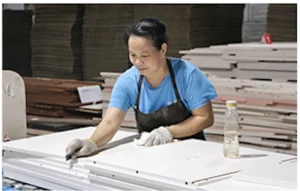
Professional factories perform random sampling checks during this stage.
4. Surface Finishing Quality Standards
Surface finishing is one of the most visible quality indicators.
For lacquer finishes:
- Even coating thickness
- No bubbles or pinholes
- Smooth texture
- Color consistency
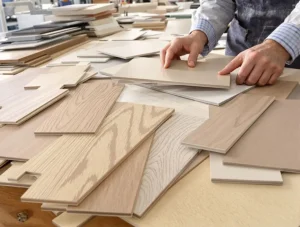
For veneer:
- Grain direction consistency
- Proper adhesion
- No edge lifting
For melamine:
- Clean edges
- No chipping
- Surface scratch inspection
For stainless steel:
- Welding smoothness
- Anti-fingerprint finish consistency
- Surface flatness
Lighting inspection is often used to detect surface defects.
5. Assembly & Structural Strength Testing
Before delivery, cabinets are assembled and tested.
Checks include:
- Door alignment
- Drawer smoothness
- Hinge tension
- Structural stability
- Load-bearing capability
Professional factories perform open-close cycle tests to simulate long-term use.
6. Pre-Delivery Inspection (Final QC)
Final quality control is critical.
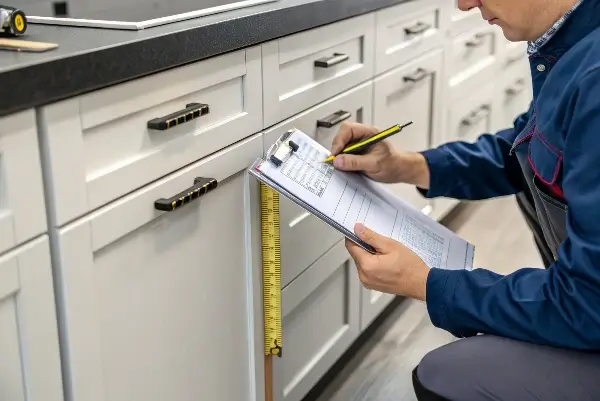
A proper pre-delivery inspection includes:
- Dimension re-check
- Finish inspection
- Hardware testing
- Packing verification
- Labeling accuracy
For overseas projects, packing quality is especially important to prevent damage during shipping.
7. Installation Quality Control
Quality does not end at the factory.
On-site inspection should verify:
- Level and alignment
- Gap consistency
- Secure fixing
- Functional testing
- Final cleaning and adjustment
Improper installation can damage even perfectly manufactured furniture.
8. Documentation & Traceability

Professional manufacturers keep records of:
- Batch numbers
- Material suppliers
- Production dates
- Inspection reports
This allows traceability if issues arise later.
Common Quality Risks in Custom Furniture Manufacturing
- Starting production without final drawings
- Using low-grade hardware to reduce cost
- Skipping moisture testing
- Poor surface finishing control
- Inadequate packaging
Choosing an experienced manufacturer with a structured QC system reduces these risks significantly.
How Buyers Can Protect Themselves
If you are sourcing custom furniture:
- Request material samples
- Ask for QC reports
- Conduct factory audits (or video audits)
- Confirm warranty terms
- Review packaging standards
Transparency is a strong indicator of quality confidence.
Final Thoughts
Controlling quality in custom furniture manufacturing requires:
- Clear documentation
- Strict material inspection
- Precision production
- Structured final inspection
- Professional installation
Quality control is not one step—it is a continuous process from design approval to final handover.
For long-term durability and customer satisfaction, investing in proper quality systems always pays off.