
For real estate developers, furnishing residential projects involves more than selecting attractive furniture. Bulk purchasing decisions directly affect project cost control, construction timelines, buyer appeal, and long-term property value.
Custom furniture has become increasingly popular in residential developments because it offers better space efficiency, consistent design, and scalable production. However, ordering custom furniture in bulk requires careful planning.
Before placing a large order, developers should evaluate several critical factors to ensure a smooth project execution.
1. Align Furniture Design with Project Positioning
Every real estate development targets a specific market segment. Furniture specifications should match the overall project positioning.
Developers should clarify:
- Target buyers or tenants
- Price positioning (mid-range, premium, or luxury)
- Interior design style and branding
- Expected durability and lifespan
Over-specifying furniture can unnecessarily increase project costs, while under-specifying may reduce the perceived value of the property.
A well-balanced furniture strategy supports both sales performance and cost efficiency.
2. Balance Standardization and Customization
In large residential developments, standardization helps control cost and simplify production.
Developers often standardize:
- Kitchen cabinet modules
- Wardrobe layouts
- Bathroom vanity designs
- Storage systems
However, some flexibility may still be needed for different unit types such as:
- Studio apartments
- Two-bedroom units
- Penthouse or premium units
A hybrid approach—standard core modules with selective customization—usually provides the best efficiency.
3. Evaluate Production Capacity and Lead Time
Bulk furniture orders require strong manufacturing capacity and reliable scheduling.
Developers should confirm:
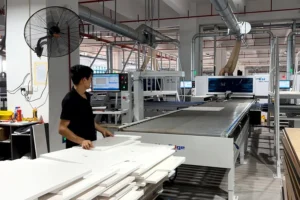
- Factory production capacity
- Current order workload
- Estimated lead time for large orders
- Ability to deliver in phases
Typical production timelines for large residential projects range from 6 to 10 weeks, depending on scale and material complexity.
Working with a manufacturer that can scale production without compromising quality is essential.
4. Verify Material Specifications
Material transparency is crucial in bulk procurement.
Developers should confirm:
- Panel core materials (plywood, MDF, particle board)
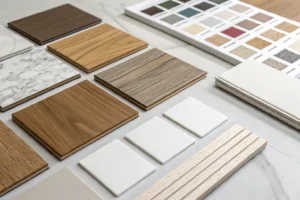
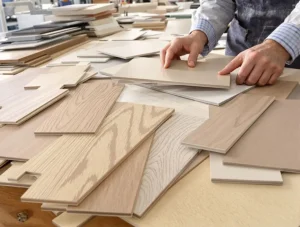
- Surface finishes (melamine, veneer, lacquer, laminate)
- Hardware brands and quality standards
- Moisture resistance and durability
Requesting material samples before production ensures that the finished products meet expectations.
Clear specifications prevent disputes later in the project.
5. Review Quality Control Procedures
When ordering furniture in large quantities, small quality problems can multiply quickly.
Reliable manufacturers should implement:
- Raw material inspections
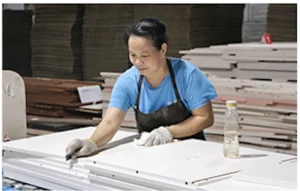
- In-process quality checks
- Final pre-shipment inspections
- Sample unit approval before mass production
Developers should also request inspection reports or production photos to verify quality control procedures.
A structured QC system significantly reduces risk.
6. Plan Logistics and Delivery Scheduling
Furniture delivery must align with construction progress.
Developers should coordinate:
- Floor-by-floor delivery schedules
- Unit labeling systems
- Packaging protection for transport
- On-site storage and staging areas
Improper scheduling may lead to storage damage, installation delays, or site congestion.
Early logistics planning ensures smoother project execution.
7. Coordinate Installation and Construction Timeline
Furniture installation is closely tied to the construction schedule.
Developers should confirm that:
- Walls, flooring, and ceilings are completed
- Electrical and plumbing systems are ready
- Appliances and fixtures are available
Installation teams should follow a structured sequence to maintain efficiency and prevent damage.
Proper coordination helps avoid costly rework.
8. Establish Warranty and After-Sales Support
Furniture performance affects the long-term reputation of a development project.
Before bulk ordering, developers should clarify:
- Warranty coverage
- Replacement parts availability
- Hardware maintenance support
- Repair response procedures
Strong after-sales support protects both developers and end users.
9. Consider Long-Term Supplier Partnerships
Developers often work on multiple projects over time. Establishing a long-term relationship with a reliable manufacturer provides several advantages:
- Consistent product standards
- Better pricing for future projects
- Faster design-to-production processes
- Improved communication efficiency
A stable partnership helps streamline future developments.
Common Mistakes Developers Should Avoid
Some common risks in bulk furniture procurement include:
- Choosing suppliers based only on the lowest price
- Skipping sample or mock-up approval
- Underestimating production lead times
- Ignoring installation planning
- Lack of clear material specifications
Avoiding these mistakes helps maintain project timelines and quality standards.
Final Thoughts
Custom furniture can significantly enhance residential developments by improving space efficiency, design consistency, and long-term durability.
However, successful bulk procurement requires careful evaluation of:
- Manufacturing capability
- Quality control systems
- Production timelines
- Logistics planning
- After-sales support
For real estate developers, selecting the right custom furniture supplier is not just a purchasing decision—it is a strategic step in delivering a successful property project.