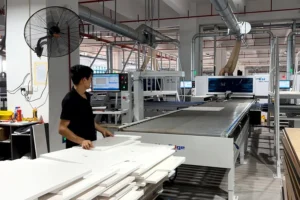

Ordering custom furniture from overseas manufacturers can provide significant advantages, including competitive pricing, flexible customization, and large production capacity. However, international procurement also introduces certain risks.
Many developers, contractors, distributors, and design firms encounter problems not because overseas sourcing is unreliable, but because common mistakes during the ordering process lead to misunderstandings, delays, or quality issues.
Understanding these common pitfalls can help buyers manage projects more effectively and ensure smoother cooperation with manufacturers.
1. Starting Production Without Finalized Drawings
One of the most frequent mistakes is beginning production before confirming final drawings.
Custom furniture projects require detailed documentation such as:
- Technical shop drawings
- Exact measurements
- Material specifications
- Hardware placement
- Finish and color confirmation
Without finalized drawings, even small misunderstandings can lead to major errors in production.
Best practice: Always approve final drawings before the factory starts manufacturing.
2. Focusing Only on Price
Price is important, but choosing the lowest quotation often leads to hidden problems later.
Some suppliers may reduce costs by:
- Using lower-grade materials
- Choosing cheaper hardware
- Simplifying internal structures
- Skipping quality inspections
A slightly higher price from a reliable manufacturer often results in better durability and fewer project risks.
3. Skipping Sample or Mock-Up Approval
Another common mistake is ordering large quantities without reviewing samples.
Before mass production, buyers should always request:
- Material samples
- Finish samples
- Hardware samples
- A mock-up unit for large projects
Samples ensure that expectations match actual production results.
4. Ignoring Quality Control Procedures
Quality control is critical in custom furniture manufacturing.
Professional manufacturers typically implement:
- Incoming material inspection
- In-process quality checks
- Final pre-shipment inspection
Buyers should confirm whether these systems are in place and request inspection reports if necessary.
5. Underestimating Production Lead Time
Custom furniture manufacturing takes time.
Many overseas buyers underestimate:
- Design approval time
- Material sourcing
- Production scheduling
- Quality inspection
Depending on project size, typical production lead time may range from 4 to 10 weeks.
Realistic timelines help avoid project delays.
6. Poor Communication and Documentation
Clear communication is essential when working across countries and time zones.
Common communication mistakes include:
- Relying only on messaging apps
- Not confirming technical details in writing
- Missing version control for drawings
Using structured communication channels such as email and shared documents ensures clarity and accountability.
7. Inadequate Packaging and Shipping Planning
Furniture is vulnerable to damage during international transportation.
Buyers should confirm that the manufacturer provides:
- Reinforced packaging
- Corner protection
- Moisture-proof wrapping
- Clear labeling for installation
Proper packaging significantly reduces the risk of shipping damage.
8. Lack of Installation Planning
Installation is often overlooked during the procurement stage.
Without proper planning, issues may arise such as:
- Missing parts
- Incorrect installation sequence
- Alignment problems
Manufacturers should provide installation drawings or guides, especially for large projects.
9. Ignoring After-Sales Support
After delivery, some issues may still require attention.
Reliable suppliers should offer:
- Spare parts availability
- Hardware replacement support
- Maintenance guidance
Confirming after-sales policies before ordering helps avoid problems later.
10. Not Building Long-Term Supplier Relationships
Many buyers treat overseas procurement as a one-time transaction.
However, building long-term partnerships with reliable manufacturers provides several advantages:
- Better pricing for future projects
- Faster communication and coordination
- Consistent product quality
- Improved project efficiency
Long-term collaboration reduces uncertainty and improves project outcomes.
Final Thoughts
Ordering custom furniture overseas can be a highly efficient and cost-effective strategy—when managed correctly.
Avoiding common mistakes such as unclear drawings, poor communication, unrealistic timelines, and inadequate quality control can significantly reduce project risk.
With proper planning, strong documentation, and the right manufacturing partner, overseas custom furniture procurement can deliver reliable quality, competitive pricing, and successful project execution.
If you want, I can also generate:
- Meta Title + Meta Description + URL Slug for SEO
- FAQ + Schema markup to improve Google search visibility
- Internal linking suggestions to connect with your cabinet and whole house customization pages.