
Whole home customization has become a major trend in residential design worldwide. Homeowners, developers, and interior designers increasingly prefer integrated furniture systems that optimize space, improve functionality, and create a consistent interior style.
Two major production models dominate the global market: European whole home customization brands and Asian furniture manufacturing systems.
While both approaches offer high-quality results, they differ significantly in design philosophy, manufacturing structure, cost efficiency, and project delivery.
Understanding these differences helps buyers make better decisions when sourcing furniture for residential or commercial projects.
1. Design Philosophy
European brands are widely recognized for their strong design heritage.
European approach:
- Emphasis on aesthetics and lifestyle design
- Strong brand identity and signature styles
- Focus on premium finishes and luxury materials
European design often prioritizes minimalism, elegance, and visual harmony.
Asian manufacturing approach:
Asian manufacturers are typically more flexible.
- Ability to replicate various global design styles
- Custom solutions tailored to client specifications
- Strong adaptability for project requirements
Rather than fixed design concepts, Asian manufacturers focus on practical customization and scalability.
2. Manufacturing Structure
European furniture companies often operate through design-driven brands with localized production or specialized factories.
Production tends to be smaller scale but highly refined.
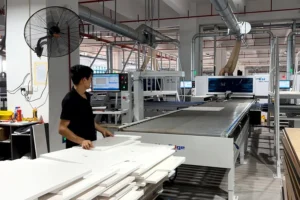
Asian manufacturers, especially in major industrial hubs such as China and Southeast Asia, operate within large manufacturing ecosystems.
Advantages include:
- Advanced CNC production lines
- Integrated supply chains
- High-volume manufacturing capability
This structure allows Asian factories to deliver large-scale projects efficiently.
3. Customization Flexibility
European brands often offer modular systems with defined configurations.
While customization exists, it usually follows preset design frameworks.
Asian manufacturers typically offer broader flexibility:
- Custom dimensions
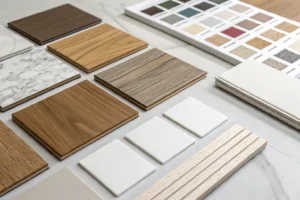
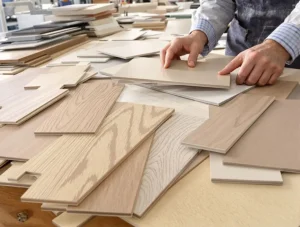
- Diverse materials and finishes
- Adaptation for unique layouts
- Project-specific design solutions
This flexibility makes Asian suppliers particularly suitable for large real estate developments and hospitality projects.
4. Cost Efficiency
Cost structure is one of the most noticeable differences.
European customization brands often involve:
- Higher labor costs
- Premium brand positioning
- Higher retail markups
Asian manufacturers benefit from:
- Lower production costs
- Large-scale manufacturing
- Efficient supply chains
As a result, Asian suppliers can often deliver comparable quality at significantly lower cost.
5. Production Capacity and Lead Time
European manufacturers typically focus on boutique production and brand-driven retail distribution.
This can result in:
- Longer production schedules
- Limited large-scale project capacity
Asian manufacturers often specialize in bulk production and project-based manufacturing, offering:
- Faster lead times
- Large-scale production capability
- Flexible scheduling for project timelines
For developers managing tight construction schedules, this capacity can be critical.
6. Project Coordination
European brands usually provide strong showroom experiences and design consultation but may rely on local partners for installation and project coordination.
Asian suppliers involved in international projects often provide integrated services, including:
- Design support
- Engineering drawings
- Production management
- Export logistics coordination
This integrated workflow can streamline large-scale projects.
7. Market Positioning
European brands are often positioned as premium lifestyle brands emphasizing design prestige and brand recognition.
Asian manufacturers are frequently positioned as global manufacturing partners, focusing on:
- value engineering
- project delivery
- customization capability
Both approaches serve different market needs.
Which Option Is Right for Your Project?
Choosing between European customization brands and Asian manufacturing suppliers depends on project priorities.
European brands may be ideal for:
- Luxury residential interiors
- Design-focused projects
- Clients seeking strong brand identity
Asian manufacturers may be better suited for:
- Large-scale residential developments
- Hospitality projects
- Cost-sensitive but quality-focused procurement
- Custom project-based production
Final Thoughts
European whole home customization and Asian manufacturing systems each offer unique strengths.
European brands emphasize design heritage and premium aesthetics, while Asian manufacturers excel in flexibility, cost efficiency, and large-scale production capability.
For developers, designers, and international buyers, understanding these differences helps ensure that the chosen supplier aligns with the project’s design goals, budget, and timeline.
In many cases, combining European design inspiration with Asian manufacturing efficiency offers the most balanced solution for modern residential projects.