How to Find a Reliable Cabinet Manufacturer in Foshan?
Planning a sourcing trip to Foshan? You’re likely heading to showrooms in Lecong or Luocun, but this is a huge mistake. You’ll see polished samples but learn nothing about a factory’s real capabilities.
To find a reliable manufacturer, skip the showrooms and ask to see their production line. A trustworthy factory will be transparent about their processes, from CNC cutting and PUR edge banding to their QC checklists and packaging methods. Their ability to deliver consistently is what matters, not their prices.
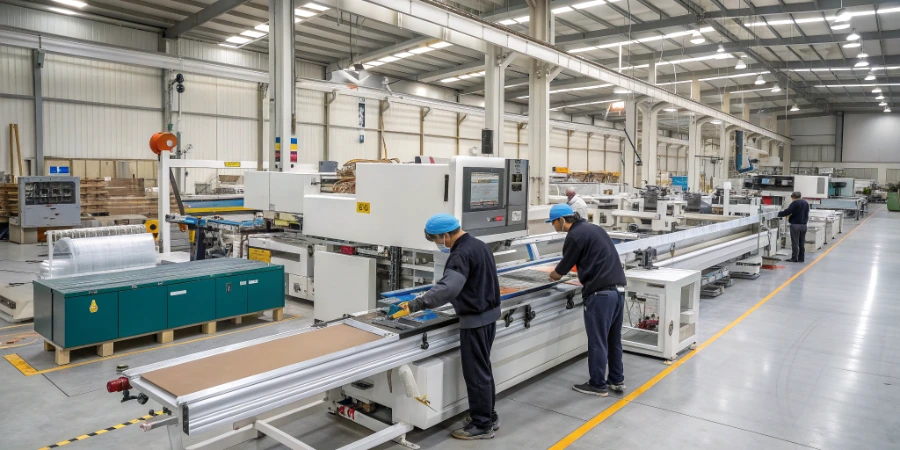
I’ve guided many buyers like you through the Foshan furniture market. The biggest mistake they make is thinking their job is to "find" a factory. The real challenge is to screen for a reliable partner among the thousands of options. Most of the flashy showrooms you see are just dealers, disconnected from the actual production. They can sell you a sample, but can they handle a 200-unit hotel project with consistent quality? Probably not. Let me share some on-the-ground insights that will help you separate the real manufacturers from the traders, and the reliable partners from the risky ones.
How to find a reliable supplier in China?
Are you starting your supplier conversations by asking for the price? This approach immediately signals you as a novice and attracts the wrong kind of suppliers, who will tell you any price to get the conversation started.
A reliable supplier is identified by their ability to handle complex projects, not by their low prices. Ask about their capacity for large orders, their process for shop drawings, and their production scheduling. These questions reveal their true capabilities far more than a price quote.

The first question most buyers ask is, "What’s your price per linear foot?" This is the least helpful question you can ask. In Foshan, nearly every factory can quote a price that sounds good, as the profit margins are quite thin. But that price means nothing if they can’t deliver on time, maintain quality across hundreds of units, or pack the goods properly for international shipping. These failures are what kill your project’s budget and timeline. Instead, you need to change your opening questions to focus on what really matters for a commercial buyer.
Questions That Reveal True Capability
- Project Capacity1: "Can you handle a multi-container order for a hotel project? Can you ensure quality consistency for repeat orders for the same project next year?"
- Technical Skills2: "What is your process for shop drawing approvals? Do you provide suggestions for structural optimization?"
- Process Management: "Can you provide a detailed production schedule? Can I see your QC records and packaging standards for export?"
A supplier who can confidently and transparently answer these questions is a potential partner. One who deflects or just talks about price is likely a risk.
How to find a cabinet manufacturer?
You’ve made contact with a potential factory, but their beautiful showroom tells you nothing about their actual production. You are worried they might just be outsourcing your order to a smaller, less reliable workshop.
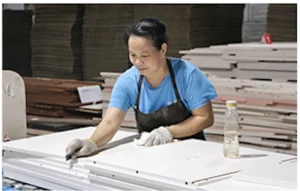
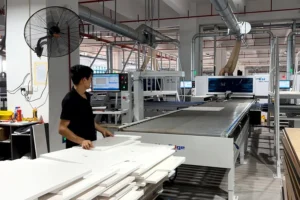
The only way to verify a manufacturer is to tour their factory floor. A reliable factory will proudly show you their production process, including their CNC machinery, edge banding technology, pre-assembly area, and packaging line. If they resist a factory tour, it’s a major red flag.
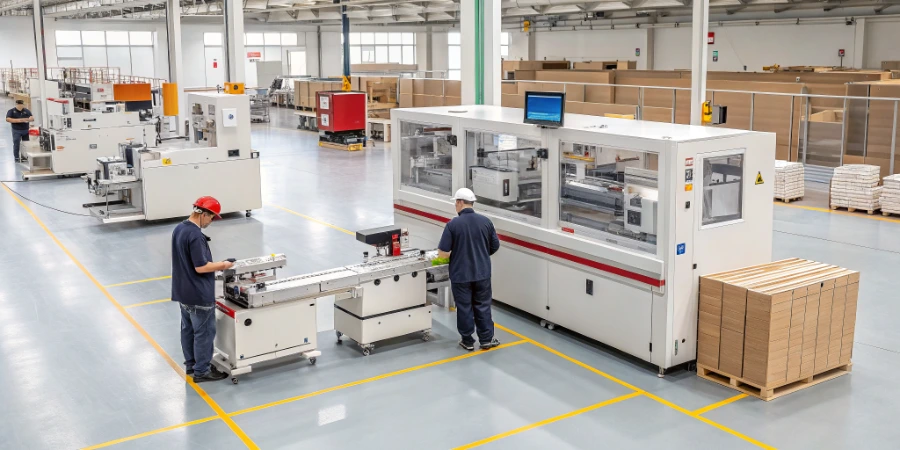
As an expert in sourcing, I can tell you that a factory’s showroom is pure marketing; their workshop is the reality. I’ve seen massive, luxurious showrooms that were fronts for chaotic and outdated factories. A truly professional manufacturer is proud of their investment in technology and process. They will be eager to demonstrate their capabilities because it justifies their quality and pricing. When you are on the factory floor, you are no longer a tourist; you are an inspector. You need to know what to look for.
Your Factory Inspection Checklist
| Area | What to Look For | Why It Matters |
|---|---|---|
| Cutting Workshop | Computerized CNC machines. | Ensures precision and consistency for every panel. Manual cutting is inaccurate. |
| Edge Banding | A modern edge banding machine, specifically asking if they use PUR glue3. | PUR (polyurethane) glue provides a much stronger, more water-resistant seal than standard EVA glue. |
| Pre-Assembly Area | A dedicated space where cabinets are assembled before packing. | This is where they should have a standardized Quality Control (QC) process4 to check for fit, finish, and hardware function. |
| Packaging Area | Standardized, multi-layer packaging with corner protectors. | Shows they understand the rigors of international shipping and care about the product arriving safely. |
| Warehouse | Organized and labeled raw materials and finished goods. | A systematic warehouse indicates good management and process control. |
If a factory can’t show you these things, they are not a high-level manufacturer.
Are kitchen cabinets made in China any good?
You have heard negative stories about the quality of products from China, making you hesitant. You’re concerned that a lower price will mean a product that fails, leading to costly claims and damage to your reputation.
Yes, the best kitchen cabinets from China are world-class quality, but you get what you pay for. The top-tier factories in Foshan serve major global brands and developers. They never compete on the lowest price; they compete on reliability, technology, and scale.
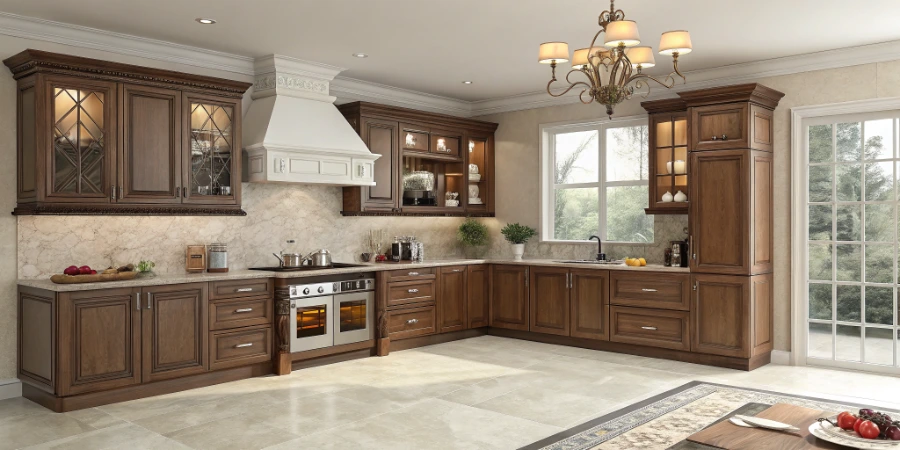
There is a persistent myth that China only produces low-cost, low-quality goods. For the cabinet industry in Foshan5, this is simply not true. Foshan5 is one of the most sophisticated furniture manufacturing hubs in the world. The best factories here are not small workshops; they are highly automated facilities that supply some of the biggest names in the global construction and design industry. These factories intentionally avoid the low-price game. They know that cutting corners to win a bid on price alone leads to failure.
A low price from a Foshan5 supplier is a warning sign. It often means they are using low-density particle board that will sag, inferior EVA glue for edge banding that will peel in humid conditions, and knock-off hardware that will fail within a year. They cut costs by skipping a formal QC process. In contrast, the premier factories invest in high-quality materials, German machinery, and rigorous quality control6. Their prices are not the lowest, but their overall cost is. You have fewer defects, no project delays, and no costly rework.
Are kitchen cabinets made in Vietnam good quality?
You are exploring Vietnam as an alternative sourcing location to China. However, you’re unsure if the supply chain there is mature enough to handle complex, high-quality projects, and you risk trading one set of challenges for another.
While Vietnam’s furniture industry is growing, Foshan, China still holds a significant advantage for high-end, customized cabinet projects. This is due to Foshan’s incredibly deep and integrated supply chain ecosystem. Everything from hardware to finishing materials is available locally at a high-quality level.
I frequently get asked about sourcing from Vietnam7, and it is a viable option for certain types of products, especially standard, high-volume solid wood furniture. However, for a commercial buyer like Michael who is focused on customized cabinetry for large projects, Foshan’s ecosystem8 is currently unmatched. In Foshan, a cabinet factory is surrounded by hundreds of specialized suppliers. If a project requires a specific type of German hinge, a unique Italian laminate finish, or a complex lighting system, those suppliers are often just a few miles down the road. This concentration creates incredible efficiency and allows for a high degree of customization and technical problem-solving.
In Vietnam, the supply chain is less developed. A factory may need to import specialized hardware or finishing materials, which can add significant time and complexity to the production schedule. This can also make it more difficult to produce a quick sample or replace a damaged part. For a developer or distributor who needs a partner capable of executing complex, project-based work with tight deadlines, Foshan’s mature and integrated supply chain provides a level of speed, flexibility, and reliability that is still very difficult to find elsewhere.
Conclusion
Finding a good factory in Foshan is not about luck; it’s about a systematic screening process. You need a partner who can guarantee your project’s success, not just offer the lowest price.
-
Understanding Project Capacity is crucial for evaluating a supplier’s ability to meet your needs effectively. ↩
-
Exploring essential Technical Skills can help you assess a supplier’s capability to deliver quality and innovation. ↩
-
Explore the advantages of PUR glue for stronger, water-resistant seals in manufacturing, ensuring product durability. ↩
-
Learn about the importance of a standardized QC process to ensure product quality and functionality before shipping. ↩
-
Explore this link to discover top-notch furniture manufacturers in Foshan, known for their quality and innovation. ↩ ↩ ↩
-
Understanding the significance of quality control can help you appreciate the craftsmanship behind premium furniture. ↩
-
Discover the challenges of sourcing from Vietnam, including supply chain issues and complexities that can affect production timelines. ↩
-
Explore this link to understand why Foshan’s ecosystem is unmatched for customized cabinetry, offering efficiency and specialized suppliers. ↩