Unlike domestic purchases, overseas procurement involves additional risks—communication gaps, shipping damage, quality inconsistencies, and delayed production.
This guide explains how to evaluate and choose a reliable custom furniture manufacturer for international projects.
1. Evaluate Manufacturing Capability, Not Just Price
Low pricing is attractive—but price alone does not guarantee reliability.
A strong manufacturer should have:
- In-house production facilities (not only trading operations)
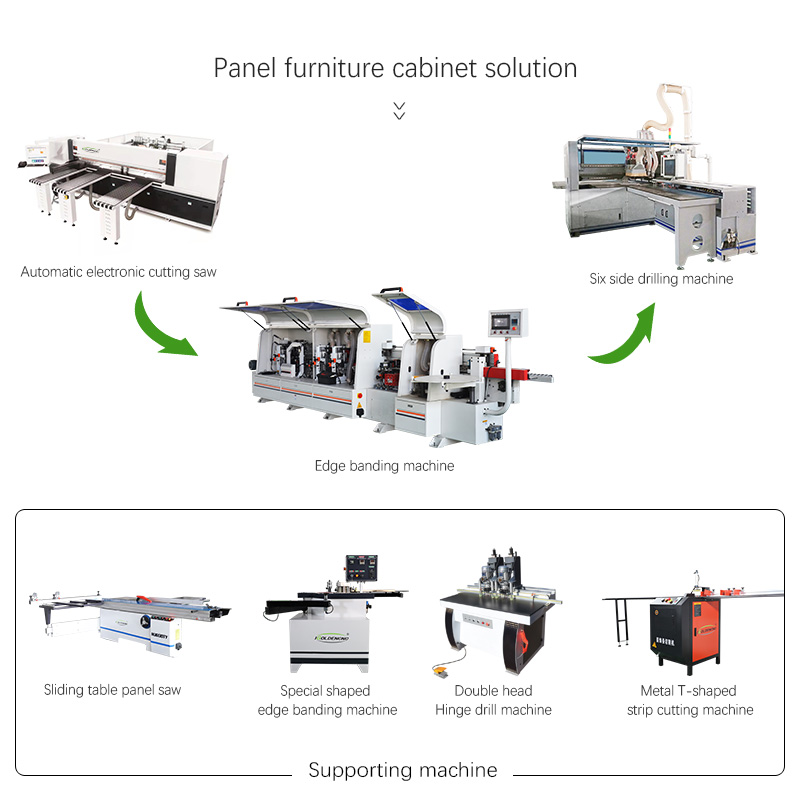
- CNC machining equipment
- Surface finishing workshops (lacquer, veneer, melamine, stainless steel)
- Structured assembly lines
- Dedicated quality control teams
Ask for:
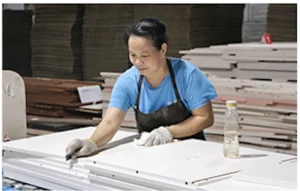
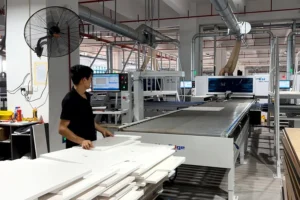
- Factory videos
- Workshop photos
- Equipment lists
- Production process explanations
Real manufacturing capability reduces dependency on outsourcing and improves consistency.
2. Check Experience with Overseas Projects
Export experience matters.
A reliable manufacturer should understand:
- International packaging standards
- Container loading optimization
- Moisture protection
- Customs documentation
- Project-based shipment coordination
Ask questions like:
- How many overseas projects have you completed?
- Which countries are your main export markets?
- How do you handle installation coordination remotely?
Experience reduces costly surprises.
3. Review Quality Control Systems
Quality problems in custom furniture often come from poor process control.
A professional manufacturer should have:
- Material inspection procedures
- Production-stage quality checks
- Pre-shipment inspection
- Dimension verification systems
- Hardware testing protocols
Request:
- QC reports
- Inspection photos
- Testing procedures
- Sample approval process
Structured quality systems are more important than verbal promises.
4. Assess Design & Engineering Support
Custom projects require technical accuracy.
Look for suppliers who provide:
- Detailed shop drawings
- 2D and 3D renderings
- Technical engineering review before production
- Clear approval workflow
Strong engineering support prevents:
- Measurement errors
- Installation conflicts
- Structural problems
In overseas projects, drawing accuracy is essential since rework is costly.
5. Examine Material Transparency
Reliable manufacturers are transparent about materials.
Confirm:
- Panel core type (plywood, MDF, particle board)
- Surface finish details
- Hardware brand and specifications
- Stainless steel grade (304 vs 316 if applicable)
Ask for physical samples before mass production.
Material clarity ensures expectations align with delivered results.
6. Evaluate Communication Efficiency
Communication quality often predicts project success.
Reliable manufacturers should:
- Respond promptly
- Provide clear documentation
- Clarify technical details
- Offer proactive problem-solving
If communication is unclear during early discussions, it may become worse during production.
7. Understand Lead Time Management
Timelines are critical in overseas projects.
Ask about:
- Average production lead time
- Capacity during peak seasons
- Project scheduling system
- Buffer time planning
A reliable manufacturer provides realistic timelines—not overly optimistic promises.
8. Inspect Packaging & Logistics Standards
Export packaging directly affects final delivery condition.
Confirm:
- Protective wrapping methods
- Corner and edge reinforcement
- Moisture-proof packaging
- Labeling system for installation sequence
Poor packaging can damage even well-produced furniture.
9. Request References or Case Studies
Professional suppliers should provide:
- Project case photos
- Installation site images
- Testimonials (if available)
- Portfolio examples
Case studies demonstrate real-world experience beyond brochures.
10. Evaluate Long-Term Partnership Potential
Overseas projects often require:
- After-sales support
- Spare part supply
- Technical consultation
- Future repeat orders
Choose a supplier willing to build a long-term partnership—not just complete one transaction.
Common Red Flags to Avoid
- Extremely low pricing compared to market average
- No factory photos or unclear production location
- No QC documentation
- Unclear material specifications
- Vague answers about lead time
These are signs of potential project risk.
Final Thoughts
Choosing a reliable custom furniture manufacturer for overseas projects requires evaluating more than product samples.
Focus on:
- Manufacturing capability
- Quality control systems
- Engineering support
- Export experience
- Communication clarity
A structured supplier selection process significantly reduces risk and increases project success.
For developers, contractors, and distributors working internationally, the right manufacturing partner is not just a vendor—it is a strategic asset.